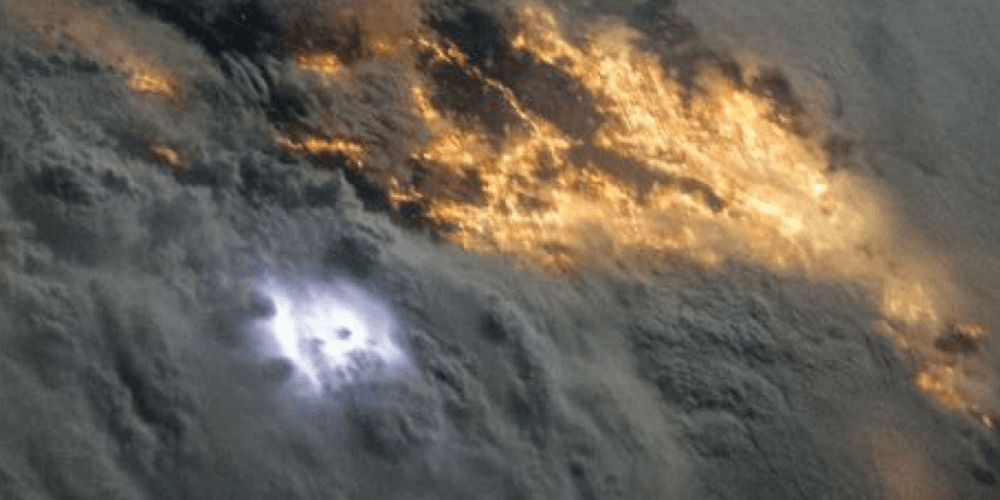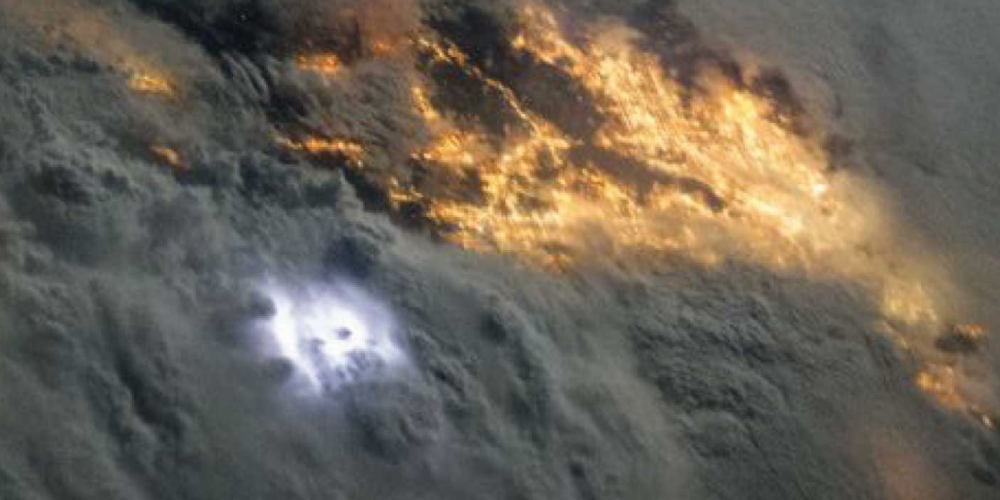
Severe weather, defined here as thunderstorms that produce tornadoes and large hail, can claim lives and cause substantial economic damage.
While the forecast skill of National Weather Service meteorologists is high, decreasing the number of false alarms remains a priority and can further increase public trust in severe weather warnings. The Geostationary Lightning Mapper (GLM) onboard GOES-16 observes the full disk view of Earth at a high temporal cadence. Because lightning can be indicative of severe weather, GLM provides an opportunity to improve forecasts. The Advanced Baseline Imager’s (ABI) visible imagery also shows cloud features, such as overshooting tops and above-anvil cirrus plumes, which have been associated with severe weather hazards.
Machine learning (ML) can help meteorologists by automating the detection of meaningful patterns in satellite data, which can lead to improved nowcasts (e.g., 15-30 minute lead time) of severe hazards.